Trump’s Tariff Shock: A Critical Analysis of Challenges and Opportunities for Indian Exporters
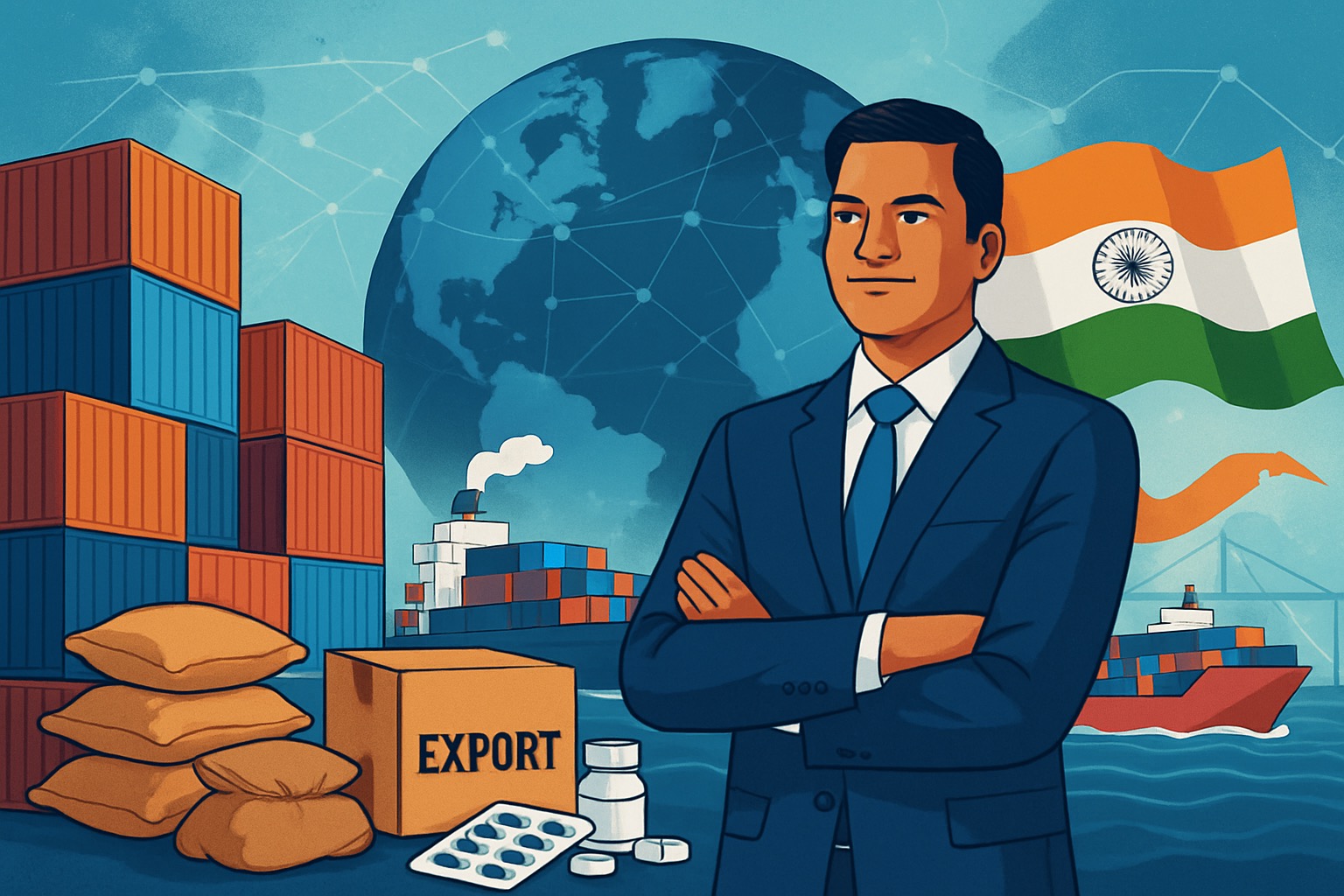
US President Donald Trump’s announcement of a sweeping 25% tariff on Indian exports, effective August 1, 2025, marks a pivotal moment for India’s export sector and broader economic trajectory. This comprehensive analysis examines the immediate impact, policy developments, and strategic pathways forward for Indian exporters navigating an increasingly complex global trade environment.
The Tariff Bombshell: Immediate Impact and Scope
Trump’s tariff announcement came with stark justification: criticizing India’s “obnoxious” non-monetary trade barriers and imposing additional penalties for India’s energy and defense purchases from Russia123. The 25% tariff affects a broad spectrum of Indian exports, with the US being India’s largest trading partner, accounting for $87 billion in bilateral trade in FY202545.
Key sectors facing immediate pressure include:
- Textiles and Apparel: Companies like Welspun Living, Gokaldas Exports, and Indo Count Industries, which derive 40-70% of revenue from the US market, face severe competitive disadvantage678
- Pharmaceuticals: India’s $10+ billion pharmaceutical exports to the US, representing nearly one-third of the sector’s global shipments, are at risk despite current exemptions967
- Electronics and Smartphones: India’s emergence as the leading smartphone supplier to the US market, surpassing China with 44% market share in Q2 2025, faces potential disruption910
- Auto Components: $2.2 billion worth of auto parts exports face the full tariff impact11
- Marine Products: The US imports nearly one-third of India’s $7.2 billion marine exports, primarily shrimp11
Strategic Counter-Moves: India’s Policy Response Framework
New Trade Agreements as Buffer Mechanisms
India has strategically diversified its trade partnerships through comprehensive agreements that offer alternative market access:
India-UK Comprehensive Economic and Trade Agreement (July 2025)
The landmark trade deal, signed on July 24, 2025, provides unprecedented duty-free access for 99% of Indian exports to the UK, covering the entire trade basket1213. This agreement is projected to boost bilateral trade by £25.5 billion annually and add £4.8 billion to UK GDP13. For Indian exporters, this represents a critical hedge against US market volatility, particularly for labor-intensive sectors like textiles, marine products, and engineering goods.
India-EFTA Trade and Economic Partnership Agreement (Effective October 2025)
The agreement with European Free Trade Association countries (Switzerland, Norway, Iceland, and Liechtenstein) includes an unprecedented $100 billion investment commitment over 15 years, facilitating the creation of 1 million direct jobs in India1415. The deal offers Indian exporters 92.2% tariff-free access to EFTA markets, with 100% market access for non-agricultural products14.
Regulatory Modernization: RBI’s Draft FEMA 2025
The Reserve Bank of India’s Draft Foreign Exchange Management (Export and Import of Goods and Services) Regulations 2025 represents a comprehensive overhaul of India’s trade framework161718. Key provisions include:
- Streamlined Documentation: Unification of Export Declaration Form (EDF) with shipping bills for EDI ports, eliminating redundant submissions
- Flexible Payment Timelines: Extended realization periods up to 15 months for goods stored in overseas warehouses
- Enhanced Trade Financing: Introduction of merchanting trade transactions (MTT) and third-party payment protocols
- Digital Integration: Automated processes reducing compliance burden and improving cash flow management
Export Performance Analysis: Resilience Amid Challenges
Despite external pressures, India’s export performance in 2025 demonstrates remarkable resilience:
Overall Growth Trajectory
- Total exports (merchandise and services) reached $210.31 billion in April-June 2025, registering 5.94% growth19
- Services exports maintained robust growth at 12.45%, reaching $387.50 billion in FY 2024-2520
- Electronics exports surged 46.93% to $4.15 billion in June 202519
Sectoral Highlights
- Pharmaceuticals: 5.95% growth to $2.62 billion despite global headwinds19
- Engineering Goods: Modest 1.35% growth to $9.50 billion, maintaining export resilience19
- Marine Products: Strong 13.33% growth, demonstrating sector robustness19
Competitive Landscape: Regional Export Dynamics
China’s Export Redirection Strategy
China’s response to US tariffs reveals strategic export redirection, with shipments to India surging 12.4% to $11.13 billion in May 2025, while US exports fell 34.5%21. This creates both opportunities and challenges for Indian exporters, as Chinese goods may compete more aggressively in third-country markets.
Vietnam’s Trade Deal Advantage
Vietnam secured a more favorable 20% US tariff rate compared to India’s 25%, potentially shifting global supply chain preferences2223. Vietnam’s Q2 2025 GDP growth accelerated on strong exports, with the US remaining their largest export market2324.
Bangladesh’s Export Challenges
Bangladesh faces potential $2 billion decline in garment exports amid rising tariffs and logistical challenges, including India’s revocation of transshipment facilities25. This creates opportunities for Indian textile exporters to capture displaced market share.
Policy Innovation: Export Promotion Mechanisms
GST Framework Optimization
The GST regime continues to provide significant competitive advantages for Indian exporters:
- Zero-rated Supply Status: Exports remain tax-free with full input tax credit refunds2627
- Automated Refund Mechanisms: Streamlined processes reducing working capital blockage2829
- Digital Integration: Enhanced e-governance platforms improving compliance efficiency
Export Incentive Schemes Enhancement
The government has strengthened multiple support mechanisms:
- RoDTEP Scheme: Comprehensive refunds on embedded taxes and duties3031
- Interest Equalization Scheme: 3% subsidy for MSME exporters, 2% for large exporters in specific sectors30
- Market Access Initiative: Financial assistance for international trade fair participation and market research3031
Rupee Internationalization: Strategic Currency Implications
India’s efforts to internationalize the rupee offer long-term export competitiveness benefits. With 53 rupee-rouble trade accounts operational and banks from 22 countries opening Special Rupee Vostro Accounts32, exporters can:
- Reduce Currency Risk: Eliminate exposure to dollar volatility in bilateral trade3334
- Lower Transaction Costs: Reduced forex conversion expenses3536
- Enhanced Bargaining Power: Improved negotiation position in international contracts33
Strategic Recommendations for Exporters
Immediate Risk Mitigation
- Market Diversification: Leverage new FTAs with UK and EFTA countries to reduce US market dependency
- Supply Chain Optimization: Enhance documentation and compliance to avoid 40% penalties on transshipped goods
- Financial Hedging: Utilize rupee trade mechanisms where available to reduce currency exposure
Medium-term Competitive Positioning
- Value Addition Focus: Move up the value chain to justify premium pricing despite tariff headwinds
- Quality Certification: Invest in international standards compliance to access premium market segments
- Technology Integration: Adopt digital platforms for enhanced operational efficiency and global reach
Long-term Strategic Planning
- Innovation Investment: Focus on R&D to develop unique product offerings with higher margins
- Sustainability Compliance: Align with global ESG requirements, particularly for European markets
- Regional Hub Development: Establish regional distribution centers to serve multiple markets efficiently
Outlook and Conclusion
While Trump’s 25% tariff represents a significant challenge, India’s diversified trade strategy, robust policy framework, and competitive export sectors provide multiple pathways for resilience and growth. The successful negotiation of comprehensive trade agreements with the UK and EFTA, combined with regulatory modernization and innovative export promotion schemes, positions Indian exporters to navigate current challenges while building long-term competitive advantages.
The key to success lies in strategic agility—leveraging new market opportunities, optimizing operational efficiency, and maintaining competitiveness across multiple global markets. With India’s export target of $2 trillion by 2030, the current challenges may catalyze the diversification and innovation necessary to achieve this ambitious goal.
For Indian exporters, the message is clear: while the US market remains important, the future belongs to those who can successfully operate across multiple global markets with enhanced efficiency, quality, and innovation. The policy support framework is in place—execution will determine success.
Nothing here yet.
Sign in to leave a comment.